Lumberyard Purchasing Trends Reveal Surprising Supplier Preferences
In the evolving world of building materials, where and how lumberyards source products they sell deserves some examination. Traditionally, lumberyards have largely sourced their inventories through two-step distribution. While this may still be true on a volume basis, lumberyards also frequently purchase direct from product suppliers regardless of product category.
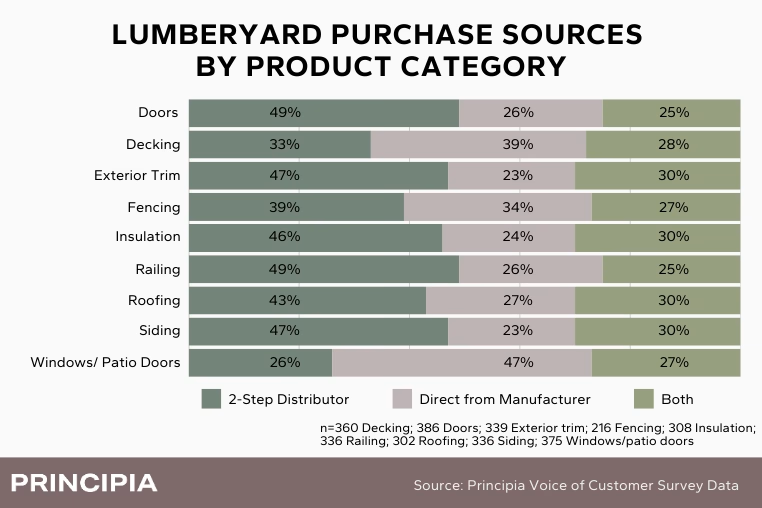
In product categories long thought to be the domain of two-step distribution, such as decking, siding and roofing, roughly half of respondents (middle and right columns combined) indicate at least some of their purchasing is made direct from the manufacturer. For windows and doors, the figure is more pronounced, topping two-thirds.
Understanding lumberyards have developed and will continue to develop relationships with product suppliers presents potential issues worthy of deeper consideration. On the one hand, there are opportunities for product suppliers to develop direct relationships with lumberyards that can be mutually beneficial, resulting in more optimum positioning for their products. On the other hand, suppliers hold long-standing relationships with their two-step distributor partners. The decision to transition from a partnership to what may seem like a competitive stance should not be taken lightly.