An Industry Analyst’s Take on the Modern Decking Showroom
By Richard Wildanger, Decking, Railing, and Fencing Industry Analyst
During a recent visit to a decking showroom as a potential customer, I was reminded how important the showroom experience can be. Homeowners arrive with questions about materials, colors, railing, cost, durability, and long-term maintenance. A well-designed showroom can facilitate the ability for consumers to confidently compare options and feel more assured about a major home improvement decision. Here are a few considerations in creating a well-designed decking showroom.
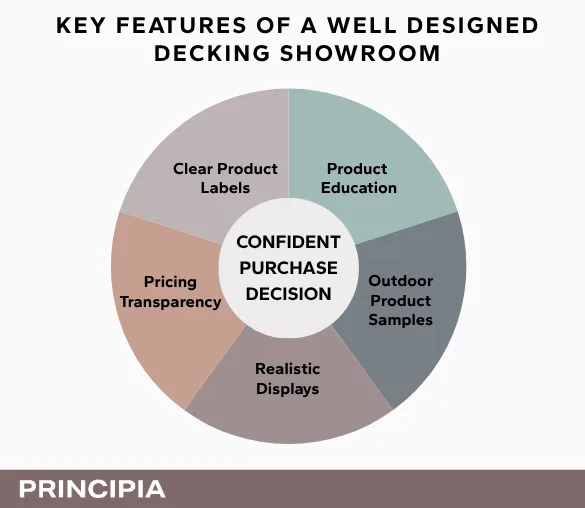
Clear education supports confident choices. Many homeowners may already have used online design tools before visiting a showroom or have some understanding of the differences between different decking and railing materials and styles. Even so, it is difficult to keep every product feature, tradeoff, and price point in mind while standing in front of decking and railing displays. Showrooms that include displays that explain the basic material choices, aesthetic factors, product tiers, and key performance attributes could help support the consumers education in person in addition to online capabilities.
Labels and signage explaining product differences. Racks of board and railing samples are most useful when they do more than identify the manufacturer and product line. Each sample could also include the material type and simple icons, ratings, or annotations for important decision factors. These could include heat retention, scratch and moisture resistance, warranty coverage, board profile, fire ratings, and expected maintenance requirements. If wood boards are displayed alongside alternative decking products, they could be labeled with the same level of detail.
Pricing simplicity. Signage or labels attached to board samples could show the relative pricing. Decking boards can use the common method of dollar signs (“$” for entry-level products, “$$” and “$$$” for mid-range options, and “$$$$” for premium products) to help homeowners quickly understand where each product fits in the price continuum. A structured approach to price labeling could support how prices vary when comparing by maintenance needs, durability, warranty coverage, color retention, moisture resistance, and expected lifespan. Railing mockups could include typical prices for the different components and infill options and the total price for the mockup. All of this could make it easier to connect product differences to each homeowner’s budget, lifestyle, and long-term expectations.
Realistic displays build confidence. Walkable decking and railing displays are especially valuable. They allow homeowners to see color and texture variations, railing styles, and design combinations in a realistic setting. If a showroom does not have space for full-scale deck mockups with railing and accessories, large-format project photos are also helpful. These examples should include both higher-end projects and more modest designs for homeowners with smaller budgets.
Product samples reveal reality The opportunity to see and touch actual decking products in a range of sunlight and weather conditions help homeowners judge color, finish, and heat buildup underfoot.
In the end, a decking showroom should do more than display products. It should help homeowners visualize the finished project, understand the tradeoffs between materials, compare alternatives confidently, providing the ability to choose products that fit both their needs and budget. Dealers can create a more helpful showroom experience by combining realistic displays, clear visual communication, practical education, hands-on product interaction, and a carefully organized product selection.
Looking for deeper insight into the decking and railing market?
Richard Wildanger helps manufacturers, distributors, and suppliers understand the trends shaping product demand, channel strategies, and market opportunities across the decking industry.