Residential Fencing: What Factors Are Influencing Today’s Fence Buyers?
By Richard Wildanger, Fencing Industry Analyst
The U.S. residential fencing market remains stable but challenged in 2026. After several years of soft demand, residential fence installation activity is expected to remain roughly flat, with performance varying considerably by region, material, and price point. New construction remains subdued, while replacement and repair activity continues to account for most residential fence demand. In today’s market, companies are competing more for market share than benefiting from broad market growth.
Fence buyers are not disappearing, they are becoming more selective. Homeowners continue to value privacy, security, curb appeal, and pet containment. However, economic uncertainty and lower consumer confidence are making buyers more deliberate about whether to proceed with a project, how much to spend, and which materials to consider. As a replacement-driven category, fencing is especially sensitive to changes in homeowner confidence and spending priorities.
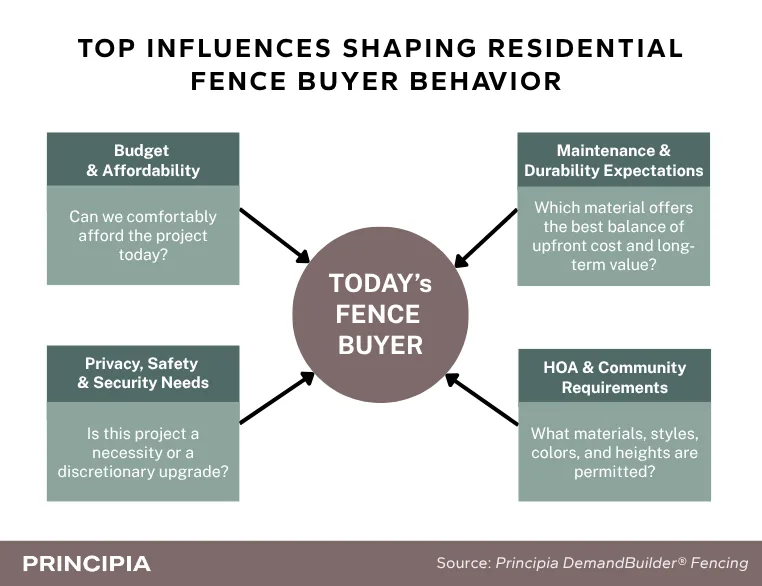
- Affordability pressure influences buyer behavior. Homeowners are facing higher everyday costs and elevated financing burdens. Many fencing projects are funded with cash or savings, making buyers more deliberate in their decision-making. Lower confidence can shift a planned replacement toward a repair. It can also push homeowners toward smaller project scopes or lower-cost materials.
- Necessity still moves projects forward. Not every fence project is discretionary. Damaged, leaning, or failing fences can create privacy, safety, or security concerns. Families with children or pets often have practical reasons to proceed. These needs help sustain replacement demand even when discretionary upgrades slow.
- Material tradeoffs become more important. Buyers are paying closer attention to maintenance, durability, and appearance. Wood remains familiar and accessible, while alternative materials gain attention among homeowners seeking lower upkeep. The decision often comes down to balancing upfront cost, long-term maintenance expectations, and HOA requirements that may limit acceptable materials, colors, heights, or styles.
- Contractor conversations can influence final choices. Installers and dealers play an important role in helping homeowners compare product options and project scope. They also explain lead times, maintenance requirements, installation complexity, and HOA approval processes. In a more cautious market, that guidance can carry greater weight in final purchase decisions.
The 2026 fencing buyer is focused on practicality and value. In a slower-growth market, homeowners are becoming more selective, carefully weighing the factors that matter most in their purchasing decisions. Economic uncertainty influences both the decision to start a project and the budget homeowners are willing to commit. Projects with clear functional value continue to move forward, while projects driven primarily by aesthetics or preference are more likely to be delayed, downsized, reconsidered, or shaped by HOA restrictions.
As fence buyers become more selective, understanding where demand is holding up and where it is softening becomes increasingly important. DemandBuilder® helps manufacturers monitor market activity, identify growth opportunities, and build more accurate demand forecasts.