Residential Fencing Forecast and Market Drivers for Remainder of 2026
By: Richard Wildanger, Fencing, Decking and Railing Industry Analyst
Recent residential fencing market trends point to a slower but more discerning future. Demand faces pressure from cautious homeowner spending and weaker new construction activity. Uncertain economic conditions and low consumer confidence are likely to remain large constraints into 2027. Buyers continue to balance durability, maintenance, aesthetics, and long-term value against budget realities.
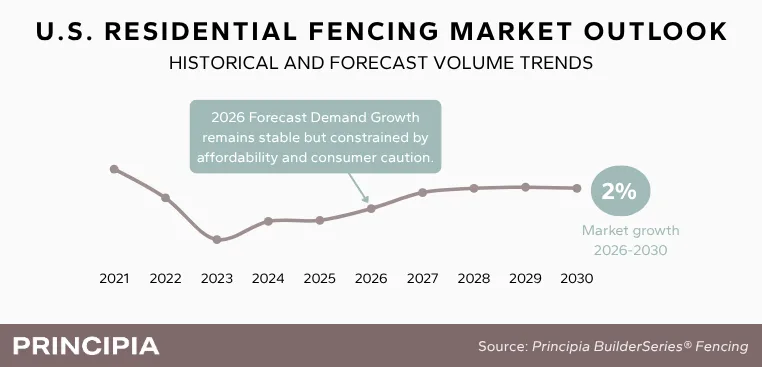
What to Keep an Eye on for the Remainder of 2026
Replacement demand remains the market anchor. With 86% of market share, repair and replacement activity plays a significant role in fencing demand. Existing fences age, fail, and weather which creates a more stable source of demand than discretionary upgrades alone. However, replacement activity overall may fluctuate with consumer confidence, especially if households remain cautious into 2027.
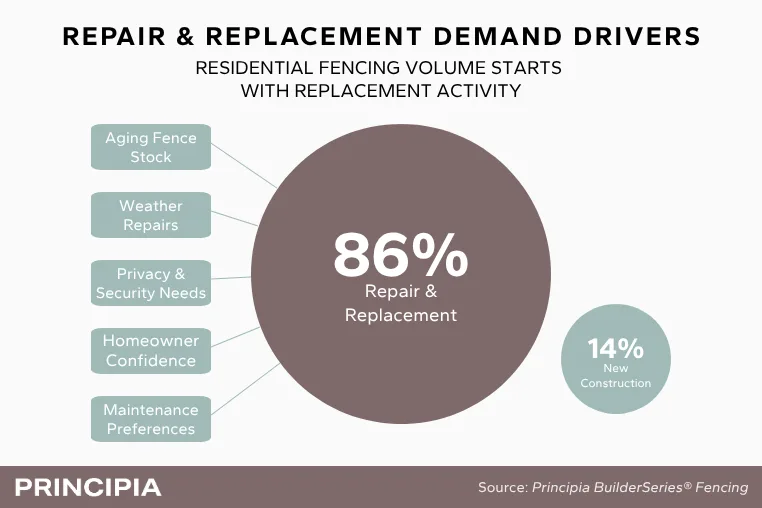
New construction is a limited growth lever. Fencing tied to new-home construction depends on builder practices, lot design, and affordability. As home affordability continues to be an issue, some builders are considering reducing costs by removing items like fencing and decking to help manage down total home costs. Economic uncertainty will also impact new homeowners’ post-move-in fencing decisions. Although a much smaller portion of the market, new construction overall activity and home affordability will play a role in demand for the remainder of the year.
Low-maintenance materials continue to gain strategic importance. Homeowners continue to show interest in materials that reduce upkeep and long-term maintenance costs. This does not mean traditional materials will lose relevance quickly. However, it does mean suppliers and contractors will want to communicate lifecycle value effectively to homeowners. Maintenance expectations have become a central factor in purchase decisions. HOA rules may also narrow acceptable choices by specifying materials, colors, heights, or styles.
Product education matters. Buyers are comparing materials with greater scrutiny. They want to understand maintenance requirements, appearance, durability, installation tradeoffs, and HOA approval processes. As the market enters a new phase in product offerings with composite products gaining momentum, educational materials that clearly outline product features should continue to be a focus for manufacturers.
As fencing manufacturers navigate an uneven demand environment, understanding the market drivers shaping demand is critical. DemandBuilder’s market forecasts and industry intelligence help manufacturers track market shifts, evaluate risk, and make informed strategic decisions.